


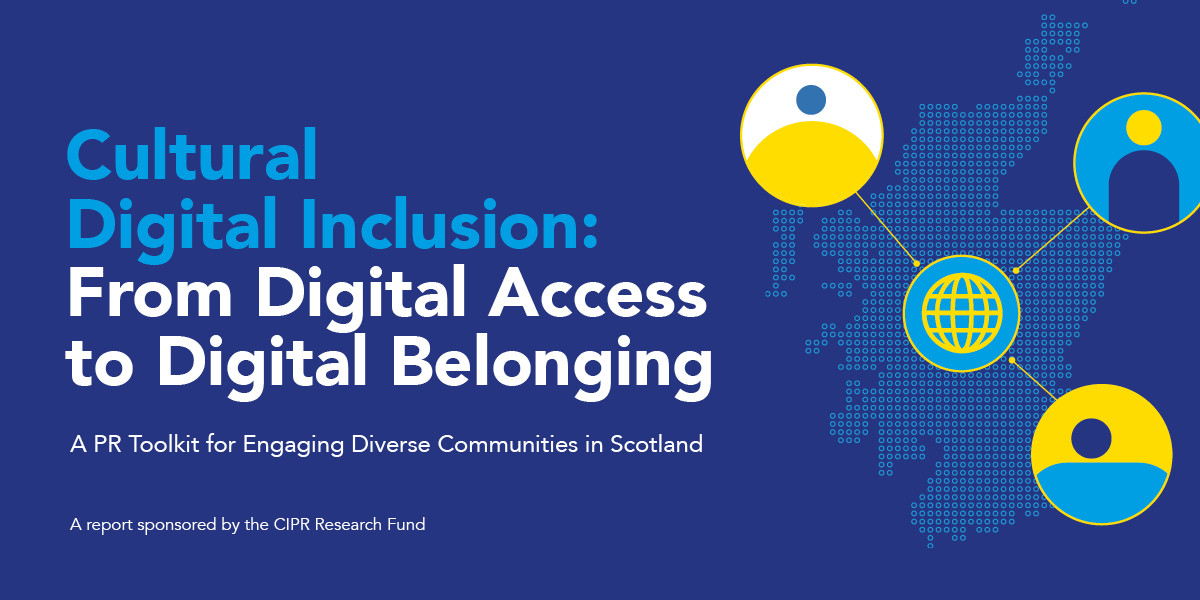
New CIPR research finds digital services are locking out communities they serve
New research from the Chartered Institute of Public Relations (CIPR) has found culturally diverse communities are being locked out of digital services by the way organisations communicate with them. The report - Cultural Digital Inclusion: From Digital Access to Digital Belonging - by Olushola Adetutu MCIPR and sponsored by the CIPR Research Fund, points to four recurring failures:
- Communication that assumes shared language and cultural knowledge
- Low representation in the stories, imagery and messengers organisations use
- Distrust rooted in past experiences of exclusion
- Short-term campaigns that do not build lasting relationships
The study sets out to understand why digital communication fails to reach these communities and how public relations professionals can build messaging people trust. Drawing on 10 in-depth interviews with PR professionals, media leaders, accessibility specialists, academics and community founders, survey responses from practitioners and community organisations, and three applied case studies across Scotland, it identifies where inclusive communication succeeds and sets out practical steps to reach audiences who may be overlooked.To address these barriers, the report provides a Digital Inclusion PR Toolkit, a resource that aims to embed inclusion into everyday PR practice. It includes readiness checks, guidance on inclusive language, frameworks for co-creating communication with communities, and a measurement approach that weighs trust and confidence alongside reach.

This research began with everyday conversations with people navigating services that are increasingly digital. What I heard again and again was that exclusion is rarely about unwillingness. It is about whether people feel understood and whether they trust the organisation communicating with them. Communicators listening first and designing messaging around how communities actually live and speak is the starting point to build digital spaces where people feel they belong.


Inclusive communication has been one of the major challenges for our profession, and this research approaches it with real care. Olushola brings a frontline perspective that is too rarely heard in professional research, grounded in the everyday experience of the communities she writes about. It gives the profession a clearer sense of what genuine digital belonging asks of us, and why that matters now.
Read and download all of the CIPR's Research Fund reports.
About the Chartered Institute of Public Relations
Founded in 1948, the Chartered Institute of Public Relations (CIPR) is the world's only Royal Chartered professional body for public relations practitioners with over 11,000 members.
The CIPR advances professionalism in public relations by making its members accountable to their employers and the public through a code of conduct and searchable public register, setting standards through training, qualifications, awards and the production of best practice and skills guidance, facilitating Continuing Professional Development (CPD), and awarding Chartered Public Relations Practitioner status (Chart.PR).